Mild Spoilers Ahead!
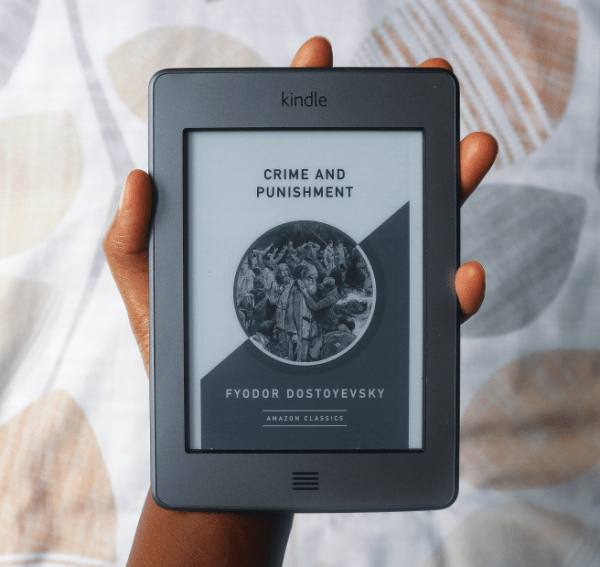
Where Do I Begin…
Let me start with the Synopsis: Crime and Punishment follows a character called Rodion Romanovich Raskolnikov, a poor, depressed ex-university student who decides he wants to commit a murder. The rest of the novel explores the consequences of his actions.
I wanted to read this book because I hadn’t yet read any Russian Literature, I also (after reading the synopsis) wanted to decide whether Dostoyevsky’s summation of a crime and its punishment was a reasonable one.
“I wanted to become a Napoleon, that is why I killed her…”
The most important thing to note about Raskolnikov’s decision to commit a murder is that he does so because he believes that there are certain types of people in this world who can and are able to somehow overstep the boundaries of the law. What’s more is that these persons essentially have the right to commit such breaches of morality and crime for the sake of the greater good of humanity. Raskolnikov believes himself to be one of these people… until that is, he commits a murder – a double murder, and almost immediately descends into a psychological breakdown.
THE POSITIVES: Dostoyevsky’s portrayals of his characters:
Raskolnikov is such a fascinating character: he has an incredible superiority complex but he’s also very compassionate which considering his abhorrent actions, is very strange. There are countless examples which depict both of those traits throughout the novel and even more-so the latter of the two – even prior to committing the murders. Moreover, even during his bouts of mania, he is pragmatic and very matter of fact, especially when it comes to the well being of his family and best friend.
And so the question begs… What is he? He’s not a psychopath, I don’t think he’s a sociopath… (maybe a little) – could he just be a person who decided to do a terrible thing? Though he only admits to feeling guilty towards the end of the novel, his thoughts and actions throughout the story prove otherwise. As a result Raskolnikov concludes that he “had no right to have taken that step.” I wonder if Dostoyevsky, genuinely believed in this theory.
There are also other characters throughout the novel who some (despite Raskolnikov’s actions) may describe as worse individuals – I certainly can name a few; which is interesting because murder, especially in the way that Dostoyevsky chose it to be carried out, is typically the worst thing you can do.
Another thing that I liked was the diverse portrayal of women in this novel – there are many that are scattered throughout, both in passing and in significant ways. There are good women and bad women, strange women and terrible women – and though the significant ones are in one way or another, tied to the men around them and subscribe to certain stereotypes they are all shown to have their own agency and are written in a believable way.
THE NEGATIVES: This book is long! (633 Kindle pages long!) It became, particularly during the middle of the novel, somewhat of a task to get through – I wouldn’t have gotten through it in the time that I had, had I not taken part in the 25 in Five challenge last month. There’s also a lot of mention to different social movements and philosophies that certain characters subscribe to, which at times, I felt detracted from the main story – i’m not too well-versed in these topics but they did add to the understanding of some characters and to some extent the views of Dostoyevsky himself.
I’m not too sure what I was expecting by the end of this book, it came to the conclusion that I suspected it would, but as for the character of Raskolnikov, though I feel like he understood that he is not “a Napoleon”, I never got the impression that he truly regretted his actions,. He seemed to be more disappointed by that fact that his mind and body rejected his grand approach and just wasn’t able to accept the pressures of the crime he’d committed. So maybe he is a bit of a sociopath?
Overall, I would definitely recommend this book if you want to give Russian Literature a go. I actually would have loved to have studied this book when I took English Literature at university because there’s honestly a lot more that I wanted to write about in this review. If you’re not too fond of philosophy but you’re interested in reading Dostoyevsky, i’d definitely say that both the want to discover whether Raskolnikov gives himself up and the decision as to what essentially is the right punishment for such a crime is enough for the story to remain intriguing throughout.
I’m looking forward to reading more Russian Literature in the future! Also I can now spell Fyodor Dostoyevsky’s name without looking it up! :)
4.4 / 5
Follow Me:




 THE-RAVE
Leave a reply to HeyGrace Cancel reply